
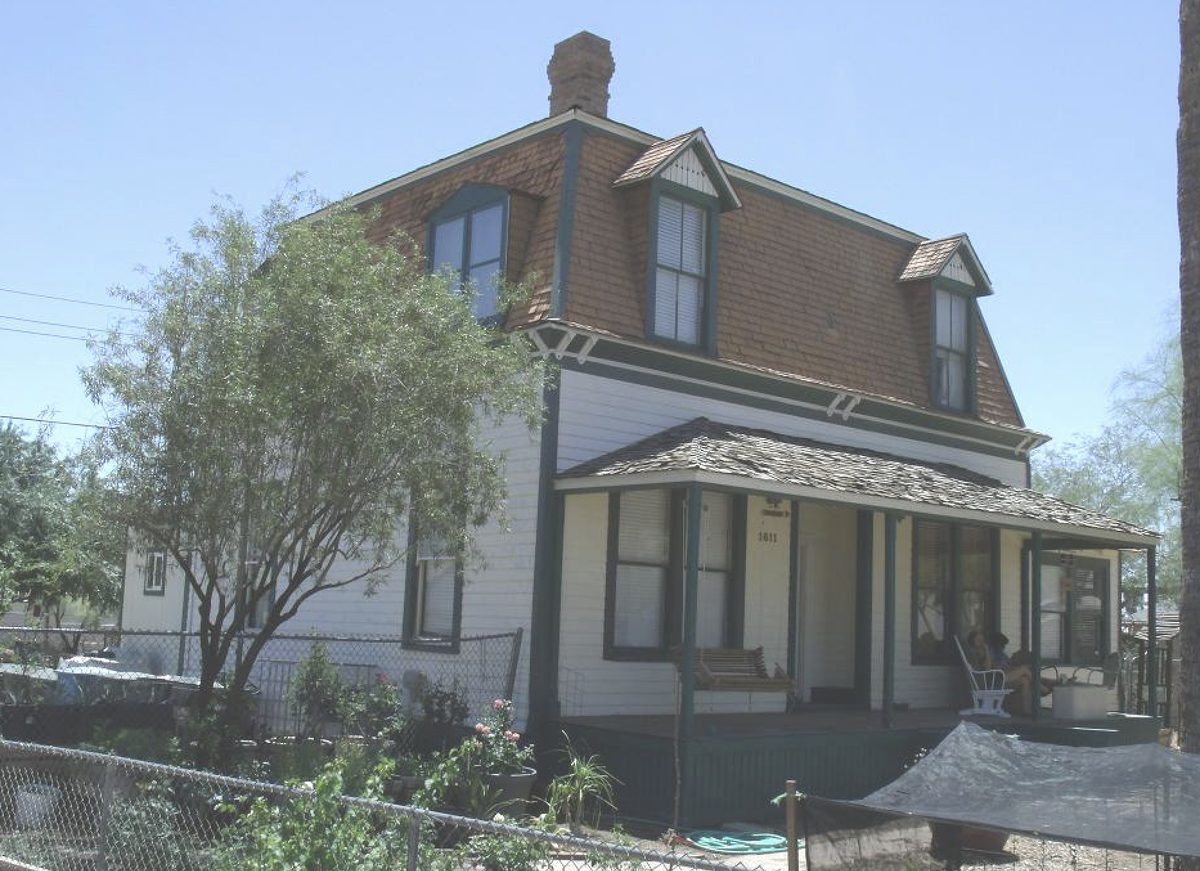
Some neighborhoods were built for show. Oakland was built for work.
This is where the people who actually ran early Phoenix lived. Railroad hands, foundry workers, and their families, in modest brick bungalows a short walk from the yards and the shops along Grand Avenue. More than a century later, it is one of the last working-class historic neighborhoods downtown Phoenix has left.
The storyFrom farm lots to the houses the railroad built
Oakland started as farmland. In 1885, Judge Charles A. Tweed recorded a plat for his land here, surveyed by William A. Hancock, the man who laid out the original Phoenix townsite and, fittingly, Tweed's own law partner. Tweed's Subdivision was four big squares of five-acre farm lots, and for a time part of it even held the first Phoenix Country Club.
The houses came later. Starting in 1909, the land was carved into the subdivisions that became Oakland and sold to working families on easy payment plans. The Phoenix Realty Company laid out the core with 133 lots, and in 1914 the new firm of Homebuilders put up the first fourteen houses. After Cave Creek Dam was finished in 1923 and the threat of flooding lifted, the rest of the neighborhood filled in. By 1938 it was block after block of small bungalows with palm trees lining the streets.
It grew up in the shadow of the state Capitol. The Arizona Capitol, completed in 1901, stands just south of here, and the first piece of the neighborhood to be platted was fittingly named the Capitol Addition. The government buildings of the Capitol Mall still line Washington Street a block below the district.
Oakland was named a Phoenix historic district in September 1988, with a boundary expansion in June 2006, recognizing a period of significance that runs from 1887 to 1951. It holds 244 contributing historic buildings, generally bounded by Grand Avenue, 19th Avenue, Van Buren Street, and the alley north of Fillmore Street.
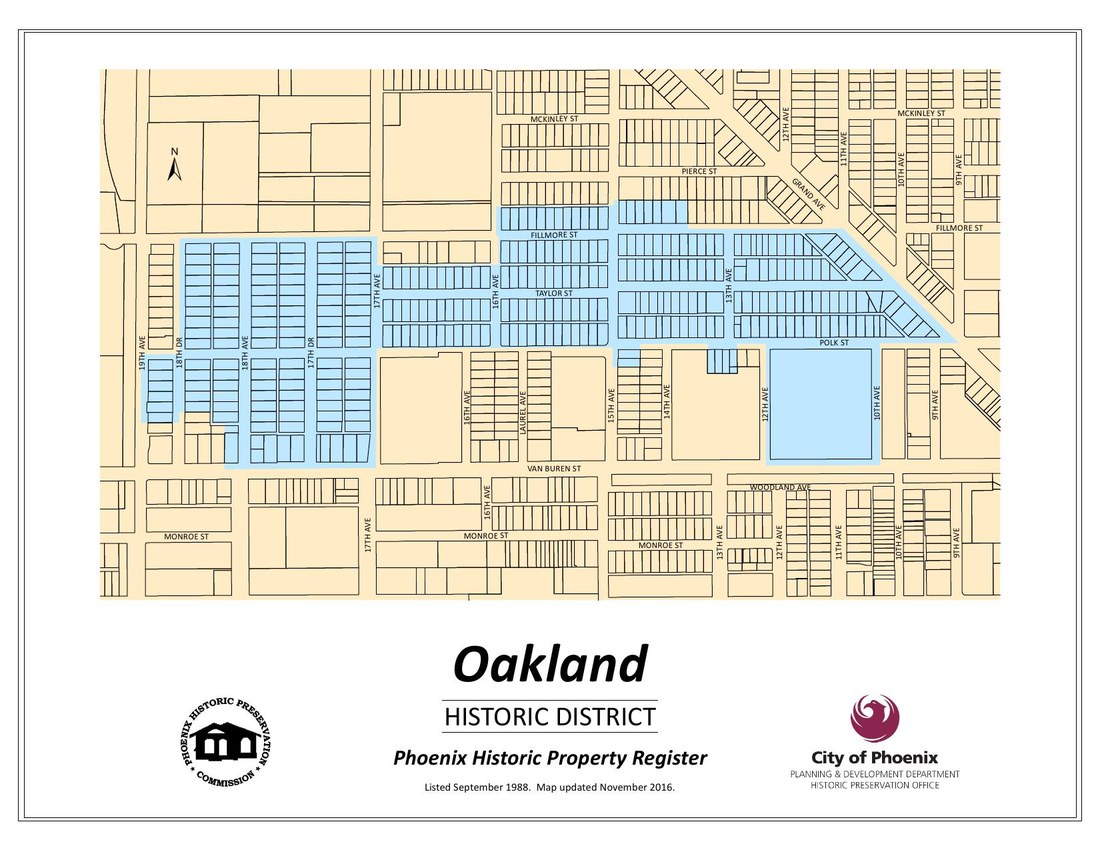
Every city has a neighborhood the working people built. In Phoenix, that neighborhood is Oakland.
Oakland Historic District, Downtown Phoenix
The namesakeThe judge behind the name
The Tweed in Tweed House was Judge Charles Austin Tweed, and his story runs right through early Arizona. Born in Massachusetts in 1813, he practiced law, won a seat in the Florida Senate, then joined the 1849 Gold Rush to California, where he served on the Sacramento city council and later two terms in the California State Senate. There he pushed ahead of his time, introducing a bill for equal pay for women and championing an early women's suffrage measure.
President Ulysses S. Grant appointed him an Associate Justice of the Arizona Territorial Supreme Court in 1870. When the territory created Maricopa County in 1871, Tweed moved to the brand-new county seat of Phoenix, farmed the land his family worked, and threw himself into the earliest efforts to harness the Salt River for irrigation, the very thing that made a city in the desert possible. He later practiced law alongside William A. Hancock, who had surveyed both the original Phoenix townsite and Tweed's own land. The plat he recorded in 1885 became Oakland, and the home on the cover of this guide still carries his name.
The homesBrick bungalows, built to last
Oakland is bungalow country of a particular kind, modest and solid. Most were built between 1914 and 1925, brick more often than not, with broad front porches and low gable roofs made for sitting out in the evening. After the mid-1920s, Spanish Colonial Revival took over, trading brick for stucco, red tile roofs, and gently arched doorways.
- Brick BungalowThe signature. Broad porch, built to work.
- Spanish Colonial RevivalStucco, red tile, arched openings.
- Period Revival cottagesThe smaller charmers in between.
- Palm-lined streetsPlanted in the 1930s, towering now.
The porch, again. In a neighborhood built by working families, the front porch was the living room, the break room, and the place you waved to everyone walking home from the yards.
The peopleA neighborhood the railroad built
Just west of Oakland, across 19th Avenue, sat the engine of the whole neighborhood. The railroad built its maintenance yard and roundhouse there, and it became the largest employer Oakland families had. Most residents simply walked to work at the yard or at the industries that grew up beside it.
It began with a Standard Oil warehouse in 1914, then Valley Lumber and the Capitol Foundry, and the rail yards that turned the western edge into an industrial corridor. These were not wealthy households. They were the carpenters, machinists, and railroad hands who kept early Phoenix running, and Oakland is one of the few places you can still see how they lived. The neighborhood even keeps a landmark from those years in the Tweed House, the home that greets you on the cover of this guide.
Getting aroundThe streetcar at the end of the block
Oakland families did not need a car, because the streetcar ran right along their edge. The Grand Avenue trolley line, horse-drawn at first and electrified by 1909, carried riders up Grand all the way to 19th Avenue and back into downtown. At its peak the Phoenix streetcar system ran more than 30 miles of track, and the Grand Avenue cars kept running until 1934.
Grand Avenue was also where you shopped. Known as Lower Grand, the stretch between Five Points and Six Points filled with service stations, cafes, markets, and in time a Safeway, a car dealership, and a department store. It was the working main street for this side of downtown.
You can still ride a piece of that history. The Phoenix Trolley Museum sits at 1117 Grand Avenue, on one of the oldest trolley lines in the city, right at Oakland's doorstep.
TodayA historic foothold, minutes from the skyline
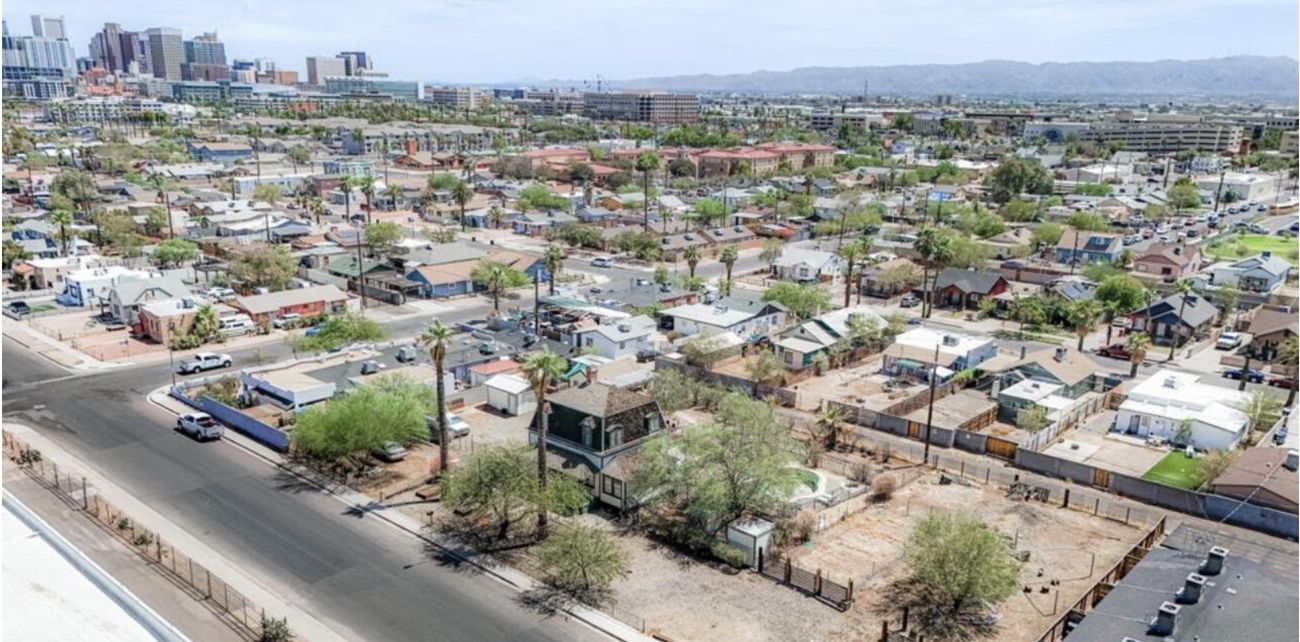
Stand in Oakland and the downtown skyline is right there. That closeness is the whole appeal now. You get a real historic neighborhood, light rail and the heart of the city within reach, and some of the most attainable historic homes left downtown. If you have been priced out of the better-known districts, this is the one to watch.
Why it lastsOne of downtown's last historic pockets, protected on purpose
Oakland matters because there is so little like it left. It is one of the few working-class historic neighborhoods still standing in downtown Phoenix, which makes protecting it important. I serve as Secretary on the board of the Phoenix Historic Neighborhoods Coalition, a nonprofit that represents the people of Phoenix's 35 historic districts and works to keep places like this one standing.
The Coalition treats preservation as an economic engine, not a relic under glass, and Oakland is a perfect example. Protect the character, and the value follows.
See the districts for yourself
The Coalition created a self-guided Driving Tour Map that points you to all 35 historic neighborhoods and explains the architectural styles you will spot along the way. More than 85,000 free copies are out in the world, and it is one of the best ways to fall for historic Phoenix.
Your guideLet's find yours

Over 22 years in Arizona real estate, specializing in historic Phoenix and serving buyers and sellers valleywide, a decade in title and escrow before that, and a seat on the board that fights to keep these neighborhoods standing. I do not see houses as inventory. I see them as architectural art, and my job is helping you find the one that feels like you.
Thinking about Oakland?
Whether you are buying your first historic bungalow, selling a home with a story, or just curious what a place here is worth today, I would love to walk you through it.
Brokers Hub Realty · Downtown Phoenix
602-644-0852 · azrealestategotogirl.com
Fall in love with Home.