
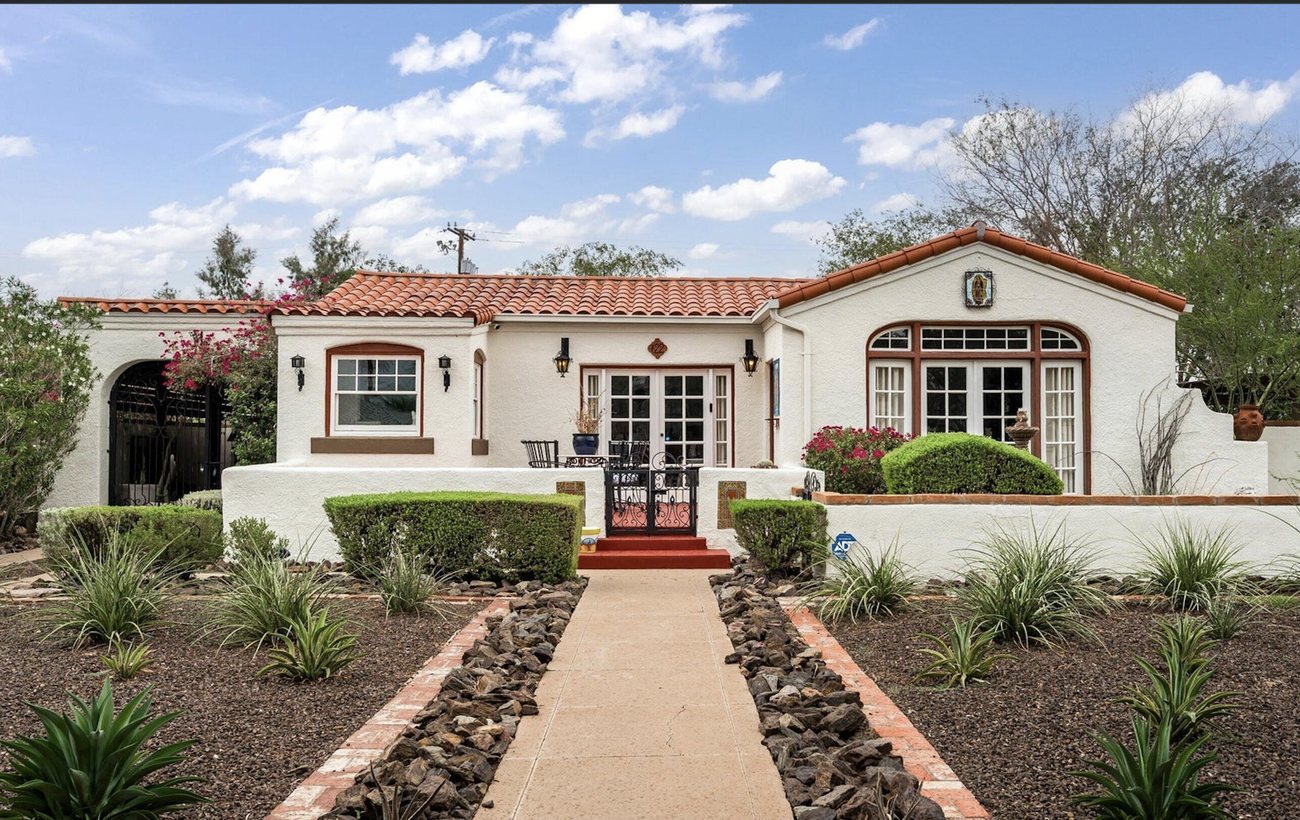
A citrus baron's land, a streetcar suburb's heyday, and one of the great preservation comebacks in Phoenix. F.Q. Story has one of the best stories downtown.
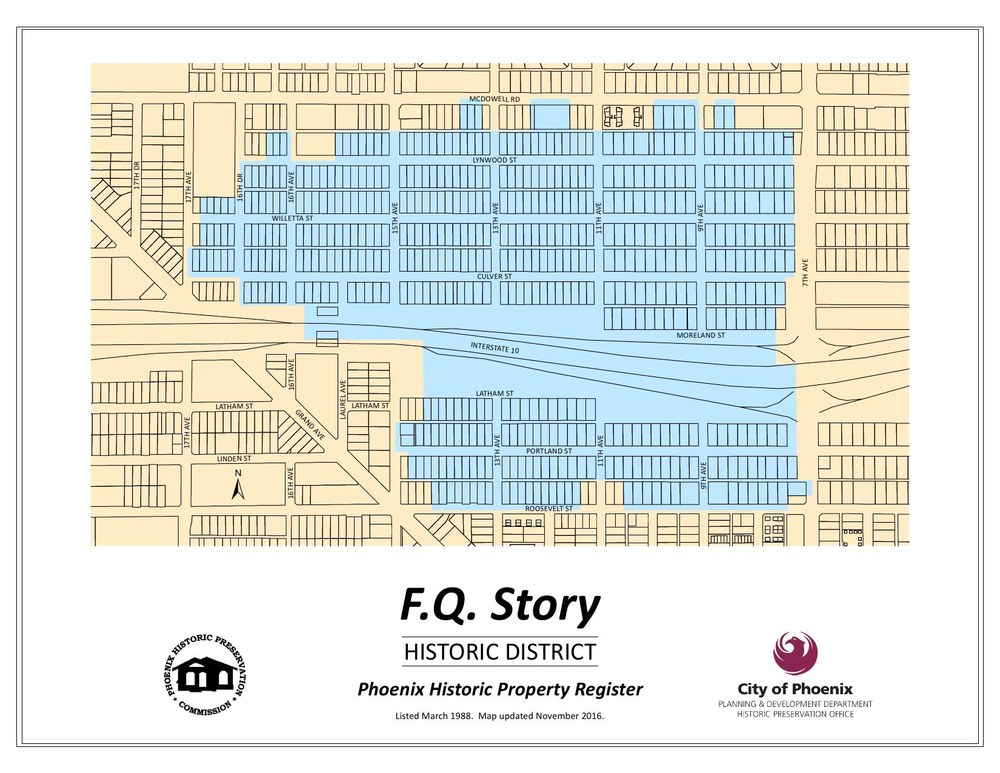
Just over 600 homes on tree-lined streets between Seventh and Grand Avenues, Story is one of Phoenix's largest and most tightly knit historic districts, as known today for its fiercely organized neighbors and its beloved annual home tour as for its architecture.
The namesakeFrancis Q. Story, father of the Sunkist orange
The neighborhood carries the name of Francis Quarles Story (1845 to 1932), and his story runs through the history of American citrus. A Wisconsin-born wool merchant who moved to Southern California for his health in 1883, Story threw himself into the young orange industry around Alhambra. He rose to president of the California Fruit Growers Exchange in 1904, and in 1907 he launched the national advertising campaign behind a brand-new name, Sunkist. That campaign built the market that made oranges a household staple, and it earned him the title the father of the Sunkist orange.
Story never lived in Phoenix, but he believed in it as an investor. He bought the land that bears his name in 1887 and added to it in 1906, part of the citrus and irrigation boom he helped lead as a figure in Arizona and California conservation. In 1919 he sold the roughly 200-acre parcel to the Phoenix firm of Jordan, Grace and Phelps, who would turn his groves and fields into a neighborhood.
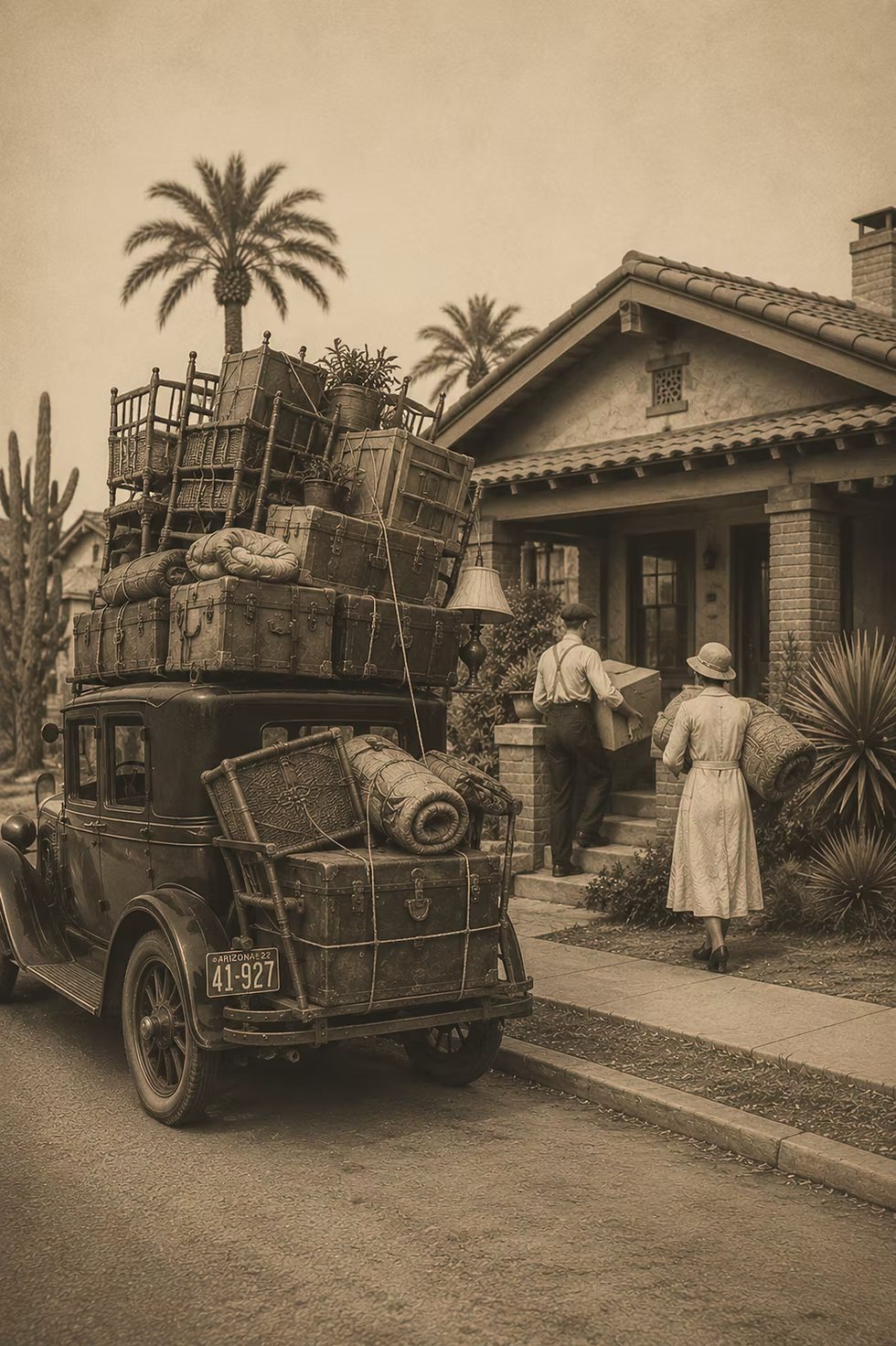
He sold the country on the orange, then lent his name to a Phoenix neighborhood that would need every bit of that staying power.
F.Q. Story Historic District, Central Phoenix
The storyFrom citrus grove to streetcar suburb
Serious building began in 1920, when Phoenix counted about 29,000 residents and Grand Avenue's streetcar line, a project Story himself had a hand in, put the land within reach of downtown. Nature pushed back first. Cave Creek flooded the area in 1921, and only a single house went up that year. Once Cave Creek Dam was completed in 1923, the worry lifted and construction took off. Building peaked in 1930 with 133 new houses in a single year, slowed through the Depression, and by 1938 the Story Addition was about 75 percent built.
The result is a remarkably complete record of how Phoenix lived between the wars, 602 homes across about 120 acres. The district was listed on the National Register of Historic Places on March 24, 1988, and the old Pay'n Takit market at Seventh Avenue and Roosevelt is individually listed alongside it.
The homesA whole era on one set of streets
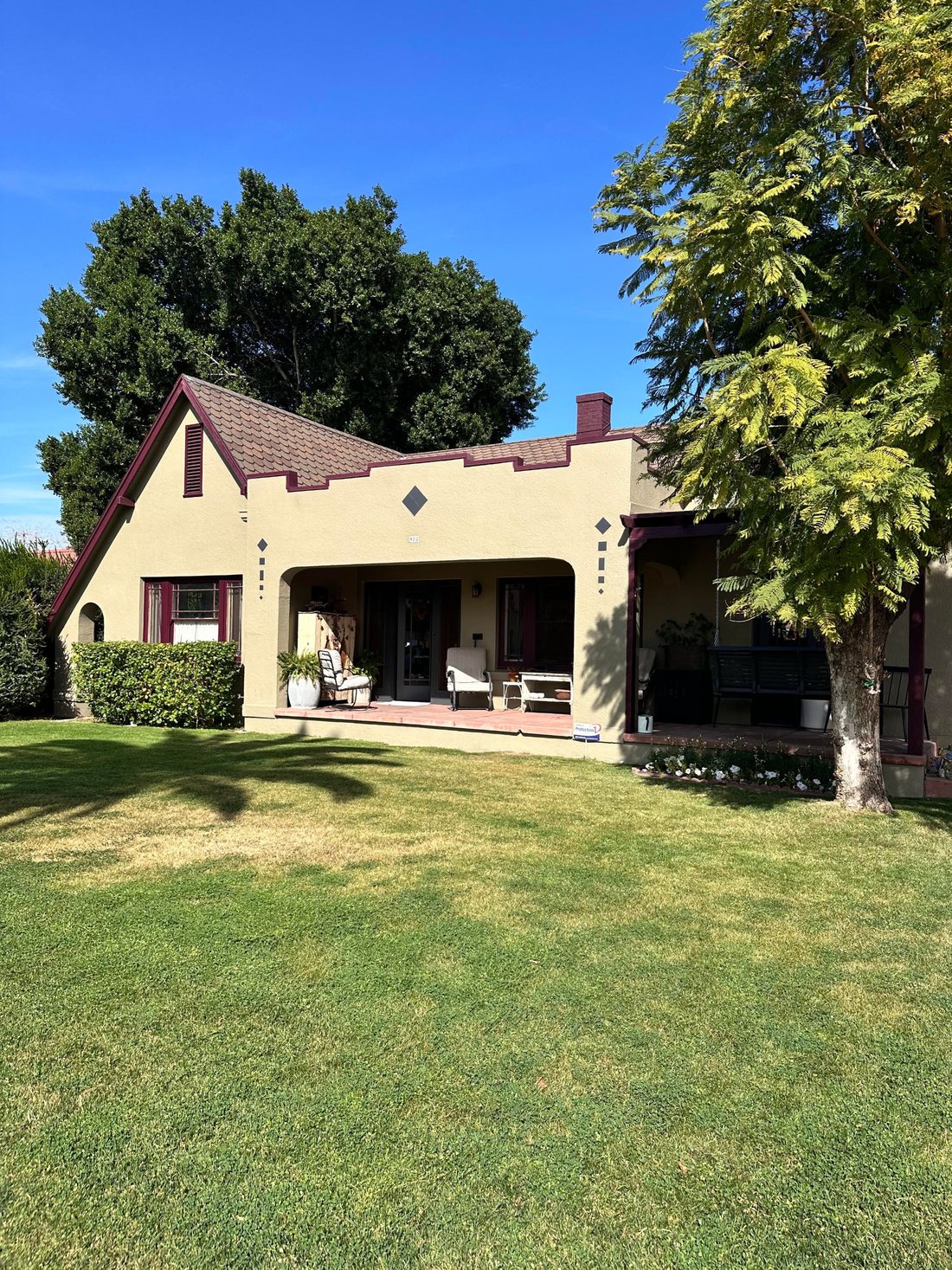
Story is a living catalog of early-20th-century style. Craftsman bungalows fill the eastern blocks, and by the mid-1920s Period Revival designs took over, with Spanish Colonial Revival and Tudor Revival the favorites. Between them you will find English Cottage, Norman Cottage, Mediterranean, Pueblo, Mission, Neoclassical, Colonial, and Art Moderne, often side by side on the same block. Later garages and porte-cocheres mark the arrival of the automobile.
- Craftsman BungalowThe eastern blocks, broad and porched.
- Spanish Colonial RevivalStucco, tile, and arches.
- Tudor RevivalBrick and steep storybook gables.
- Pueblo, Mission & Art ModerneThe rarer finds in the mix.
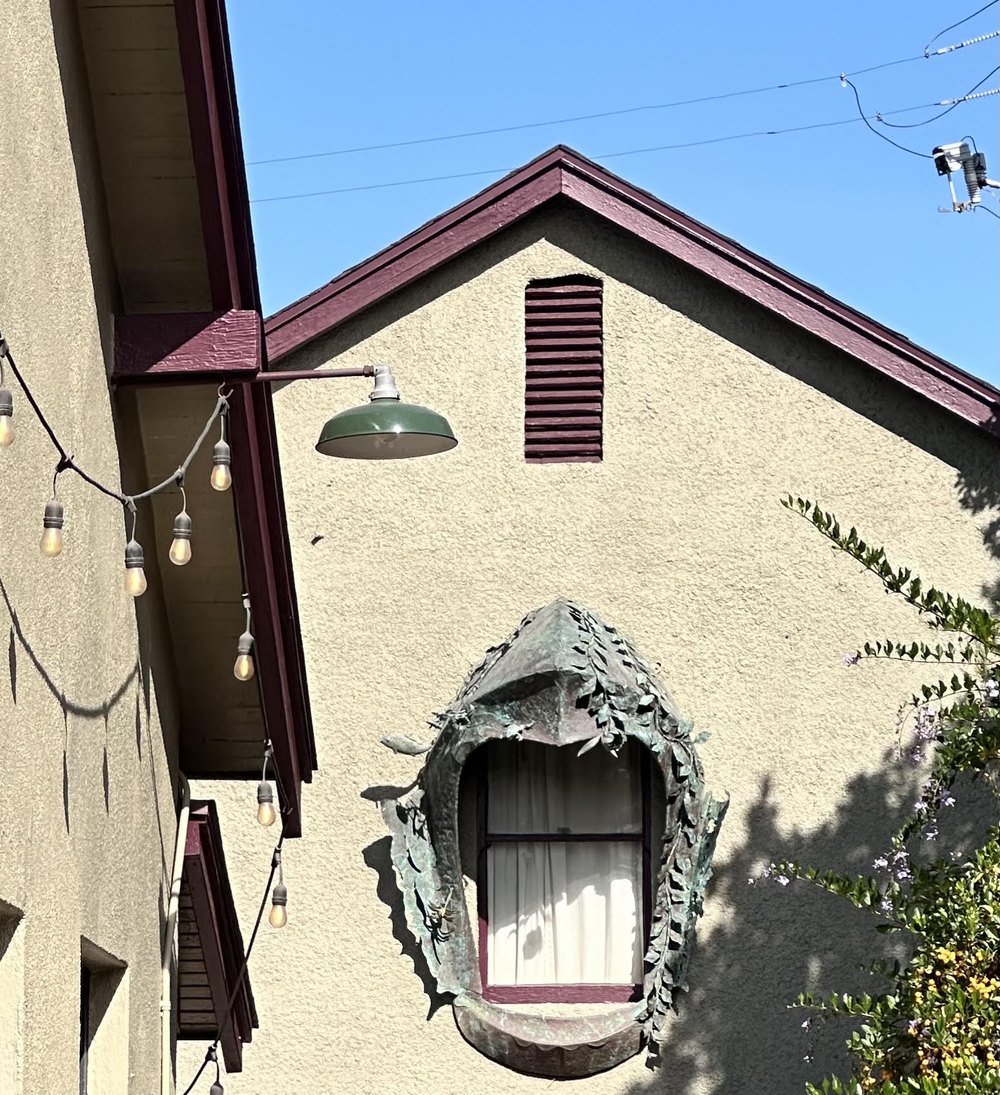
The handwork. Copper canopies, wrought iron, patterned tile, and original trim turn up all over Story. These were built by craftspeople, and it shows in details no new build reproduces.
The rescueThe freeway that nearly took the whole center
Story's survival was not a sure thing. Beginning around 1960, the Arizona Highway Department started buying and clearing a corridor two blocks wide for the Papago Freeway, the central leg of Interstate 10, straight through the heart of old Phoenix just east of Story along the Moreland Street alignment. Whole blocks came down. The Moreland neighborhood collapsed from roughly 9,000 residents to fewer than 1,500, and for more than a decade the cleared land sat in limbo, what one account called a corridor of uncertainty. The blight and falling values spread into the historic neighborhoods all around it, Story among them. Arizona voters rejected an elevated highway design in 1973 and a tunnel plan in 1975, and the fate of central Phoenix hung unresolved.
Story was saved by its own people. As the freeway hollowed out its surroundings, a determined group of residents organized to protect and restore their neighborhood rather than let it follow Moreland into the dust. That advocacy became the Story Preservation Association in 1984, and their work carried the district onto the National Register of Historic Places in 1988.
The freeway itself was finally settled in 1979, when voters approved depressing the roadway below grade and decking it over. Construction ran from 1983 until the Deck Park Tunnel opened on August 10, 1990, drawing some 100,000 people to a three-day open house. The land bridge built on top became Margaret T. Hance Park, the beloved deck park that stitched the torn center of the city back together, a short distance from Story's eastern edge.
The communityOne of the most organized neighborhoods in Phoenix
That founding spirit never faded. The Story Preservation Association is among the most active neighborhood groups in the city, with an open steering committee, resident sub-committees, a Block Watch, beautification and charitable campaigns, and a long-running newsletter, StoryTime, archived all the way back to 1984. There is even a monthly F.Q. Story Visual Award, sponsored by Six Points Hardware, recognizing the best exterior improvements. It is a neighborhood that genuinely shows up for itself.
The Annual Home Tour
Story's crown jewel is its annual historic home tour, one of the most popular in Phoenix, when neighbors open their restored interiors to the public and the whole district turns out. If you have ever wanted to see behind these front doors, this is the day. Watch the Story Preservation Association at fqstory.org for this season's date and tickets, and if you are thinking of buying or selling here, it is the perfect day to fall for the neighborhood.
The lifeWalkable, connected, and full of character
Story sits in the thick of historic central Phoenix, and the good stuff is close. The Grand Avenue arts district runs right along the neighborhood's northwest edge, a walkable string of galleries, bars, and restaurants anchored by Bacanora, the James Beard-recognized Sonoran spot at Grand and Roosevelt. A few blocks east is Roosevelt Row, with Taco Chelo, First Friday art walks, and murals, and just beyond it downtown proper, where Pizzeria Bianco, Pomo Pizzeria, and the CityScape dining and shopping block sit near the ballpark and arena.
Right at Story's northeast gateway, the corner of 7th Avenue and McDowell is crowned by one of central Phoenix's most cherished vintage neon signs, the historic florist sign that has long marked the restaurant on that corner, a local landmark the moment you turn toward the neighborhood. For everyday errands and bigger shopping, downtown's markets and the redeveloped Park Central center to the north are a short hop, along with the full run of Central Avenue retail and dining. Two neighborhood murals by artist Lucretia Torva, at Latham and 11th and at Moreland and Ninth, tell the district's own past-and-present story right on the streets.
Best of all, you can leave the car at home. The Valley Metro light rail runs along Central Avenue, about a half mile east of the neighborhood, and the Roosevelt/Central and McDowell/Central stations put the museums of midtown, ASU's downtown campus, Sky Harbor Airport, and Tempe all within an easy ride.
As for value, Story remains one of the more attainable ways into a marquee historic district, though inventory is tight and the best homes move quickly. For what is actually available and what a specific home is worth today, just ask me.
Why it lastsProtected on purpose, defended by neighbors
Story is the clearest proof in Phoenix that a neighborhood survives when its people organize to protect it. That is exactly the work I care about. I serve as Secretary on the board of the Phoenix Historic Neighborhoods Coalition, a nonprofit that represents the people of Phoenix's 35 historic districts, Story among them.
The Coalition treats preservation as an economic engine, not a relic under glass. Protect the character, and the value follows.
See the districts for yourself
The Coalition created a self-guided Driving Tour Map that points you to all 35 historic neighborhoods and explains the architectural styles you will spot along the way. More than 85,000 free copies are out in the world, and it is one of the best ways to fall for historic Phoenix.
Your guideLet's find yours

Over 22 years in Arizona real estate, specializing in historic Phoenix and serving buyers and sellers valleywide, a decade in title and escrow before that, and a seat on the board that fights to keep these neighborhoods standing. I do not see houses as inventory. I see them as architectural art, and my job is helping you find the one that feels like you.
Thinking about F.Q. Story?
Whether you are buying your first historic bungalow, selling one with a story, or just planning to catch this year's home tour, I would love to walk you through it.
Brokers Hub Realty · Downtown Phoenix
602-644-0852 · azrealestategotogirl.com
Fall in love with Home.